


CPR Verification Station Training Made Simple
A completed online course is only part of the path to a recognized CPR credential. CPR verification station training gives eligible learners a fast, guided way to demonstrate the hands-on skills required after online coursework - without needing to attend a full traditional classroom session.
For nurses, medical assistants, students, child-care professionals, and other busy learners, that distinction matters. Your employer or school needs proof that you can perform critical skills, not just that you reviewed the material online. A verification station is designed to make that final step convenient, focused, and measurable.
What Is CPR Verification Station Training?
A CPR Verification Station is a self-guided skills-testing environment used with select online-plus-skills training pathways, including eligible HeartCode Complete courses. After completing the assigned online education, you schedule an in-person appointment at a local training center to complete your hands-on skills session.
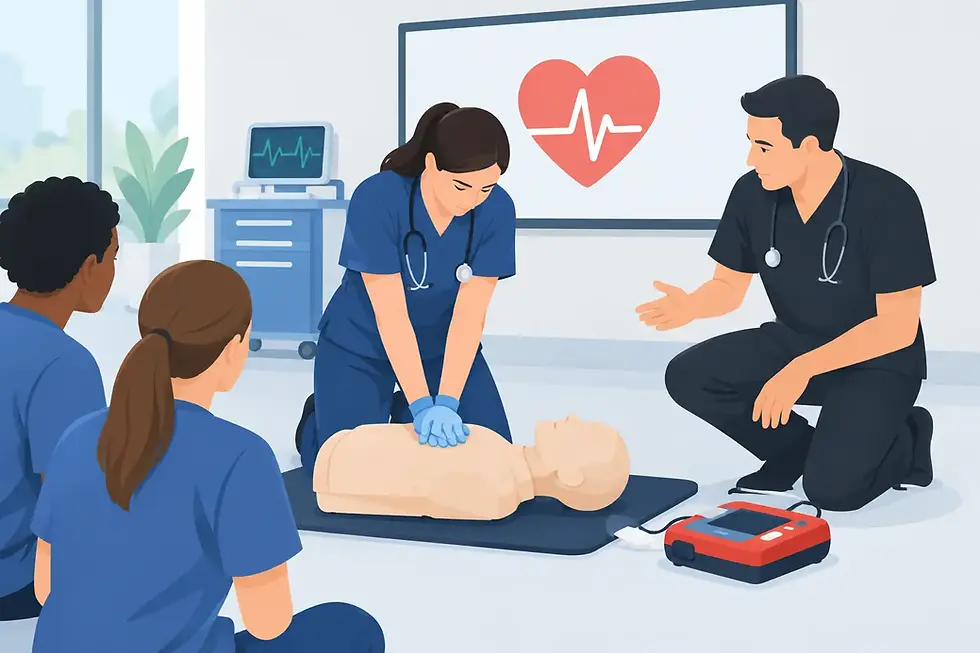
At the station, an interactive system guides you through the required scenarios. You perform skills on a feedback-equipped manikin, and the system evaluates key performance measures such as compression depth, rate, recoil, and ventilations when required for the course. You receive prompts as you work, allowing you to concentrate on correct technique and course sequence.
This format is not the same as watching a video or submitting an online quiz. It is an in-person verification of practical CPR performance. That makes it a strong option for learners who need the flexibility of online coursework but still need a structured, hands-on completion process.
How the CPR Verification Station Training Process Works
The process is straightforward, but every component must be completed in the correct order. First, enroll in the course format that matches your credential requirement. Complete the online portion fully before your skills appointment. Bring any required course completion documentation or access information to the training center.
During the appointment, the station will guide you through the skills relevant to your course. Depending on whether you are completing a Heartsaver, BLS, or another eligible pathway, this may include adult, child, or infant CPR; AED use; choking response; rescue breaths; and team-based resuscitation steps. The exact skills are determined by the course curriculum, not by a one-size-fits-all station visit.
After you successfully complete both the online and hands-on portions, your course completion is processed according to the requirements of that program. For qualifying American Heart Association-aligned courses, learners receive a digital eCard after successful completion. These credentials are generally valid for two years, though your employer, licensing board, or school may have its own renewal policy.
The key point is simple: online education and skills verification work together. Neither portion replaces the other when your selected course requires hands-on validation.
Why feedback manikins matter
CPR quality is not based on good intentions. Compressions that are too shallow, too slow, too fast, or not allowed to fully recoil may reduce their effectiveness. A verification station uses immediate feedback to help confirm that your performance meets the required standard.
That feedback is especially valuable for renewing providers. If it has been two years since your last CPR course, the station helps you identify small technique changes before you rely on those skills in a real emergency. For first-time learners, it turns online concepts into practical muscle memory.
What to Do Before Your Skills Appointment
A few minutes of preparation can keep your appointment on schedule. Complete all assigned online modules before arriving. Do not assume that a partially completed module is enough to begin the skills portion.
Bring your online completion certificate or follow the instructions provided with your course package. Wear comfortable clothing because you will be kneeling, bending, and performing compressions on a manikin. Arrive a few minutes early so you can check in, review any site instructions, and begin on time.
Before booking, confirm these four details:
The exact credential required by your employer, school, or clinical program
Whether initial certification, renewal, or skills-only testing is appropriate
Whether your course requires an instructor-led class rather than a self-guided station session
That your online course version is compatible with the selected skills appointment
This step protects your time and helps prevent a common problem: completing an online program that does not satisfy a workplace requirement. If a job posting or manager specifies a particular course type, follow that requirement exactly. When in doubt, ask your employer or program coordinator before purchasing a course.
When a Verification Station Is the Right Choice
A station-based skills session is often a practical fit for learners with unpredictable schedules. Hospital staff coming off an overnight shift, parents coordinating child care, students balancing clinical rotations, and home-care professionals with full client schedules may not have time for a lengthy classroom course.
It can also work well for confident renewals. If you are already familiar with the material and can complete online coursework independently, the verification station provides a focused route to demonstrate your skills in person. You still receive guided prompts and performance feedback, but you are not waiting for a large group class to fit your calendar.
There are situations where instructor-led training may be the better option. A first-time learner who wants more live discussion, a workplace team that needs coordinated practice, or someone who feels uncertain about CPR technique may benefit from a classroom setting. Neither choice is automatically better. The right format depends on the course requirement, your learning needs, and the level of support you want during training.
Avoid Delays in Certification
The fastest training path is the one you complete correctly the first time. Read the course description closely, finish the online portion before scheduling your visit, and choose a convenient location with appointment availability that fits your schedule.
Avoid waiting until the week your credential expires. A last-minute booking can create unnecessary pressure, especially if your employer requires proof of completion before you can work, begin clinicals, or remain compliant. Plan your renewal early enough to allow time for coursework, skills verification, and eCard processing.
At HealthForce Training Center, the goal is to make that process fast, easy, and fully guided. Local access, flexible formats, and clear completion steps help learners move from online coursework to hands-on verification without losing valuable time.
A Skills Check That Supports Real Readiness
Your CPR card may be required for a job, a clinical placement, or a professional renewal. More importantly, the skills behind it may be needed when someone stops breathing, chokes, or experiences cardiac arrest. A verification station gives you a practical moment to perform those steps, receive feedback, and leave knowing your hands-on training was completed with purpose.
Choose the credential format that meets your requirement, schedule the skills session before your deadline, and give yourself the confidence that comes from practicing when it counts.


Comments