



PALS Certification for Nurses Made Practical
A pediatric patient can decline quickly, often after subtle changes in breathing, circulation, or behavior. PALS certification for nurses prepares you to recognize that change early, work effectively within a resuscitation team, and follow an organized response when minutes matter. For nurses whose roles involve children, emergency care, procedural areas, transport, or acute care, this credential can be both an employer requirement and a practical safeguard for clinical readiness.
Pediatric Advanced Life Support, commonly called PALS, is designed for healthcare professionals who may lead or participate in the management of critically ill or injured infants and children. It builds on core life support skills and focuses on the assessment, interventions, communication, and decision-making needed during pediatric emergencies.
When Nurses Need PALS Certification
Whether PALS is required depends on your employer, unit, state regulations, and scope of practice. Nurses working in pediatric emergency departments, pediatric intensive care units, neonatal and pediatric transport, ambulatory surgery, recovery, and certain inpatient settings are commonly asked to maintain it. School, urgent care, clinic, and home-care roles may also require PALS based on the patient population and facility policy.
Do not assume that a job title alone determines the requirement. A nurse in a primarily adult unit may need PALS if the facility occasionally treats pediatric patients, while another nurse may only need BLS. Before enrolling, confirm the exact credential your employer accepts, whether you need an initial course or renewal, and when your current card expires.
For many employers, a current American Heart Association PALS eCard is the expected proof of completion. When you complete the required course components successfully, the eCard is typically valid for two years. Keeping the digital card accessible makes credential checks, onboarding, and renewal planning easier.
What PALS Training Covers for Nurses
PALS is not simply a pediatric version of adult CPR. Children often experience cardiac arrest after respiratory failure or shock, so the course emphasizes identifying the causes of deterioration before arrest occurs. Nurses learn to assess a child systematically, recognize high-risk findings, and communicate those findings in a way that moves the team toward timely treatment.
Course content commonly includes pediatric respiratory emergencies, shock, bradycardia, tachycardia, cardiac arrest, post-cardiac arrest care, and team dynamics. You will also work through scenarios involving the pediatric assessment triangle, primary assessment, reassessment, and interventions selected for the patient’s condition.
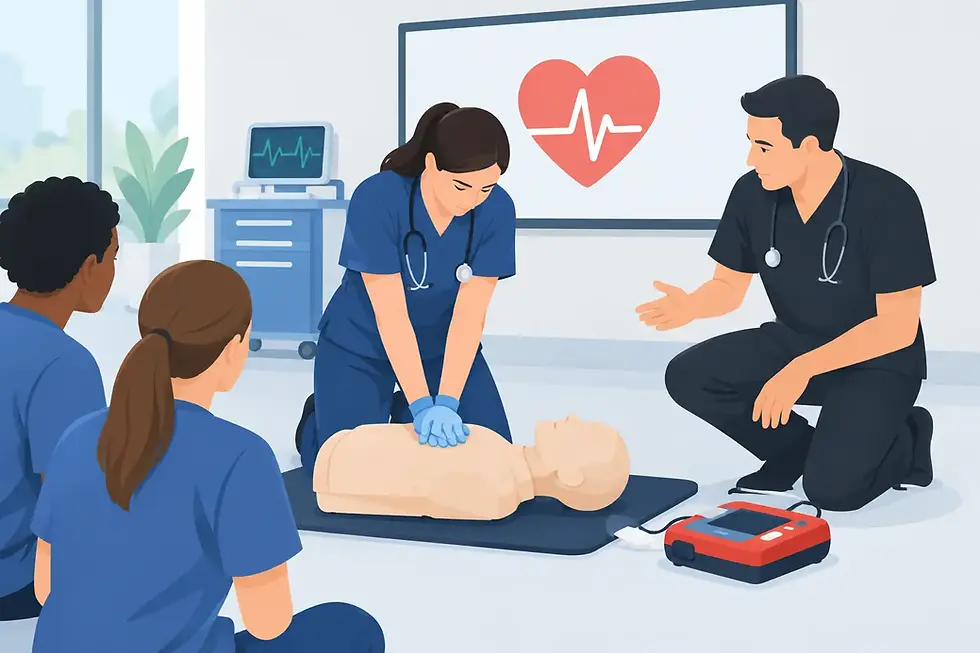
The hands-on component matters. During skills practice and testing, learners apply algorithms, use high-quality CPR, manage airway-related tasks within their role, interpret rhythm situations, and participate in team-based cases. The goal is not to memorize a script. It is to recognize patterns, prioritize actions, and stay coordinated when the room becomes busy.
Clinical judgment is part of the course
For nurses, PALS training often connects directly to bedside responsibilities. A child with increased work of breathing, altered mental status, delayed capillary refill, or worsening vital signs may need rapid escalation long before a full arrest occurs. PALS supports the clinical language and structured thinking needed to report concerns, activate help, and contribute confidently to treatment.
That said, certification does not replace facility protocols, provider orders, clinical orientation, or specialty-specific training. It gives you a recognized emergency-response framework. Your workplace determines how that framework applies to your assigned duties.
Initial PALS Course or Renewal?
The right course path depends on the status of your current credential. An initial PALS course is generally appropriate if you have never completed PALS, your prior card has expired, or your employer specifically directs you to take a full provider course. It allows more time to learn the algorithms, practice scenarios, and become comfortable with pediatric emergency concepts.
A renewal or update course is intended for learners with a current, unexpired PALS credential who need to maintain it. Renewal can be an efficient option for experienced nurses, but it moves quickly. You should arrive ready to apply key algorithms, participate in scenarios, and complete required testing.
If your card has lapsed, do not count on a renewal course being accepted. Employer rules and course policies vary. Check before booking so you do not lose time or need to repeat training.
Choosing a PALS Course Format That Fits Your Schedule
Nurses rarely have the luxury of open weekdays and predictable hours. A course format should meet credential requirements without creating unnecessary scheduling barriers. Instructor-led classroom training is a strong choice for learners who prefer real-time guidance, immediate feedback, and structured hands-on practice with an instructor and classmates.
Blended learning can work well when your schedule is less predictable. In this pathway, you complete the required online coursework first, then attend an in-person skills session for hands-on validation. The online portion offers flexibility, but it does not remove the practical skills requirement. Plan both components early enough to meet your work deadline.
Self-guided HeartCode Complete pathways may be another option where available, combining online learning with a CPR Verification Station for skills testing. This can be especially useful for independent learners seeking more control over timing. Still, verify that your employer accepts the exact format before enrollment, particularly if a facility has a specific policy for new hires or unit transfers.
A fast course is helpful only when it is complete. Look for a training provider that clearly explains the course pathway, what to bring, how skills testing works, and when you will receive proof of completion. HealthForce Training Center offers guided options designed around busy healthcare schedules, including accelerated and blended pathways where available.
How to Prepare Before Your PALS Class
Preparation makes PALS less stressful and gives you more time to focus on application. Start by confirming that your Basic Life Support credential is current. PALS assumes healthcare-provider BLS proficiency, including high-quality CPR and team response skills.
Review pediatric-focused course materials before class if they are provided. Pay particular attention to pediatric assessment, respiratory distress versus respiratory failure, shock recognition, bradycardia, tachyarrhythmias, and the purpose of each algorithm. You do not need to walk in knowing every detail by memory, but familiarity makes scenario practice far more productive.
Come prepared to participate. Wear comfortable clothing suitable for kneeling during CPR practice. Bring any required completion certificate for online coursework, your current PALS card if renewing, and a government-issued photo ID if requested. Arrive early enough to check in without missing course instructions.
During the course, ask questions tied to your practice setting. An emergency department nurse may think about rapid triage and escalation, while a perioperative nurse may focus on airway events and recovery complications. The core algorithms remain the same, but applying them to real workflow helps the training stick.
What Happens After You Complete PALS
After successfully completing all required learning, skills, and testing components, you receive a digital eCard. Many training centers issue eCards the same day, giving nurses prompt documentation for managers, credentialing departments, and employment files. Save a copy in a secure folder and record the expiration date on your calendar.
Avoid waiting until the final week before expiration to renew. Shift schedules, illness, travel, and course availability can turn a simple renewal into an urgent problem. A practical approach is to begin looking for class dates 60 to 90 days before your card expires, especially if you need a weekend, evening, or blended option.
A Credential That Supports Confident Response
PALS certification gives nurses more than a line on a compliance checklist. It strengthens the ability to notice pediatric decline, communicate clearly, and act with purpose during high-stakes events. Choose the course format your employer accepts, complete every required component, and schedule renewal before your credential becomes a last-minute concern. When a child needs rapid, organized care, preparation is one of the most useful things you can bring to the bedside.


Comments