


CPR Training That Fits Work and Real Life
A medical emergency does not wait for a convenient time. It can happen during a hospital shift, at a child-care center, in a patient’s home, at a family gathering, or in a crowded public place. CPR training gives you a clear response plan when every second matters: recognize the emergency, call for help, begin effective care, and use available equipment until advanced responders arrive.
For healthcare professionals, this training is often a job requirement with a renewal deadline attached. For parents, caregivers, and community members, it is practical preparation for the people who depend on them. The right course should give you more than a completion card. It should provide hands-on practice, a recognized credential when required, and the confidence to act without freezing.
What CPR Training Prepares You to Do
CPR is not simply a technique to memorize. Quality instruction teaches you how to assess an unresponsive person, activate emergency response, deliver chest compressions, provide breaths when your course includes them, and use an automated external defibrillator, or AED. You also learn how to respond to choking and how the steps change for adults, children, and infants.
The goal is immediate action. In a cardiac emergency, high-quality CPR helps circulate oxygenated blood while emergency medical services are on the way. Early AED use can also be critical. Training puts these steps into an order you can recall under pressure, rather than leaving you to search for answers in the moment.
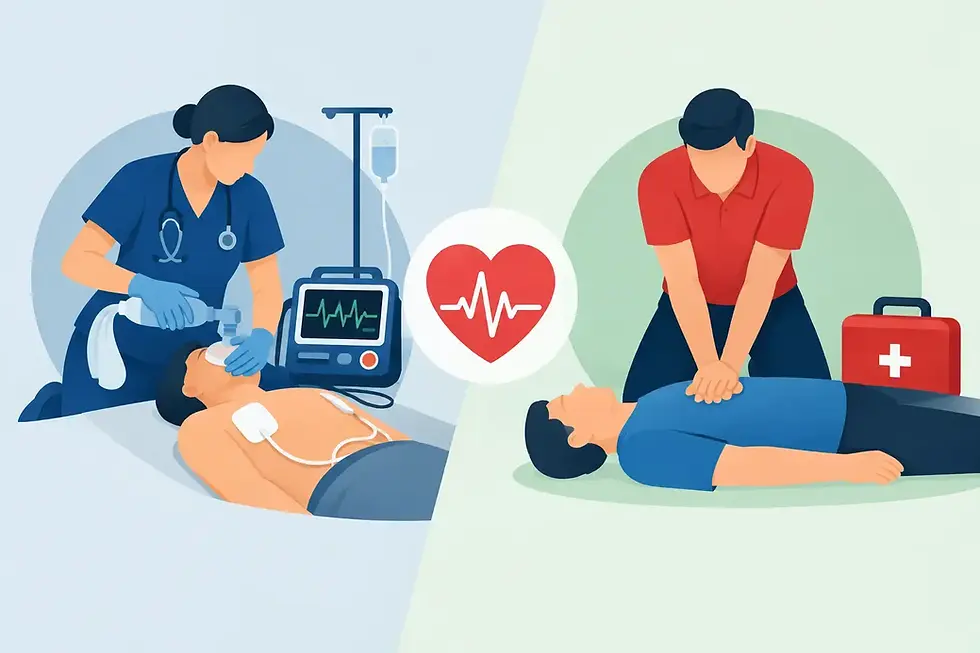
For healthcare providers, the expectations are more detailed. Basic Life Support, commonly called BLS, focuses on team-based response, high-performance CPR, use of a bag-mask device, and coordinated care in clinical and prehospital settings. A general CPR and First Aid course may be the better fit for nonclinical workplace, family, child-care, or community needs. The correct choice depends on your employer, licensing board, program, or personal goal.
Choose the Course That Matches Your Requirement
Before registering, confirm exactly what your workplace or school requires. “CPR certification” can mean different things in different settings. A nursing student may need a healthcare-provider BLS credential, while a teacher or child-care provider may need CPR, AED, and First Aid training that includes pediatric skills. A private caregiver may need both, depending on the employer and population served.
Ask whether you need initial certification, recertification, or a skills-only session after completing an online course. Also verify the required training organization, the course name, and whether an in-person skills evaluation is mandatory. These details matter because an online-only completion certificate may not satisfy a position that requires hands-on demonstration.
If you work in a clinical role, do not assume a standard community CPR class will meet a BLS requirement. Likewise, do not pay for an advanced clinical course if your role only calls for CPR, AED, and First Aid. Selecting the right pathway first saves time, avoids repeat training, and helps prevent compliance problems at onboarding or renewal.
Initial Certification, Renewal, and Blended Learning
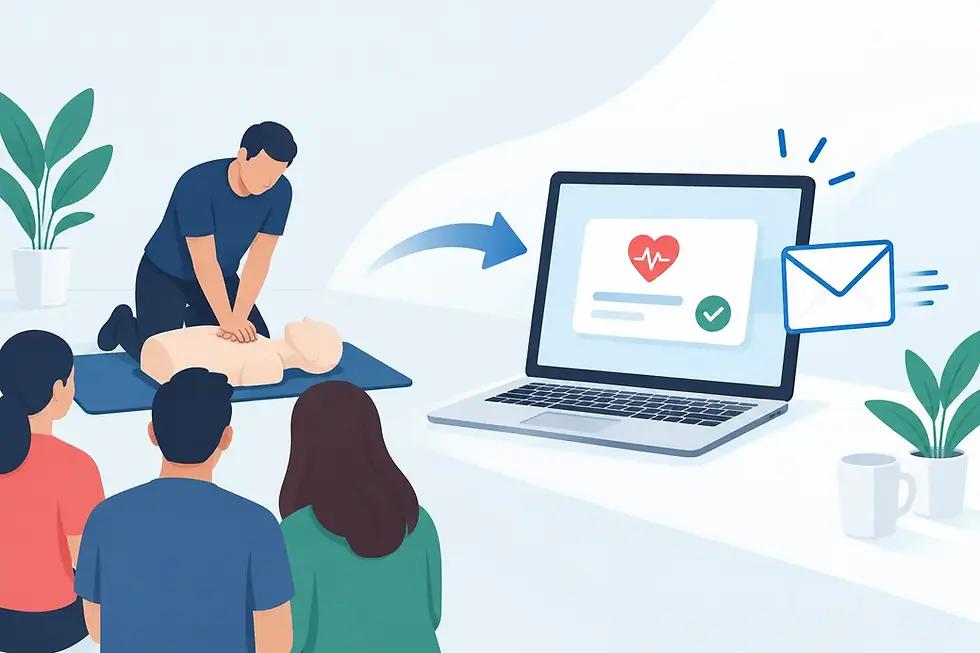
Initial students generally benefit from a full instructor-led class or a blended format that combines online coursework with an in-person skills session. The online portion allows you to cover course content on your own schedule. The in-person component confirms that you can perform compressions, use an AED trainer, and complete other required skills correctly.
A renewal course can be an efficient option if your current credential is still valid and you meet the course eligibility requirements. Do not wait until the last week if your job depends on the credential. A lapse may require you to take the longer initial course, and a missed deadline can affect your work schedule or clinical placement.
Self-guided options can also work well for experienced, schedule-constrained learners when a course pathway includes a recognized skills verification process. The trade-off is simple: flexibility is valuable, but you are still responsible for completing every required module and arranging your hands-on validation before your deadline.
Why Hands-On Practice Still Matters
Watching a video can explain compression depth and hand placement. It cannot fully show whether you can maintain the right pace, allow chest recoil, position yourself effectively, or transition smoothly to an AED. Those details are why skills practice is central to CPR education.
In a hands-on session, an instructor or approved verification system can provide feedback on performance. You may discover that your compressions are too shallow, that you need to adjust your body position, or that you lose valuable seconds when switching tasks. Correcting those issues in a controlled setting helps build muscle memory for a real emergency.
Small class formats can be especially helpful. They give learners more time to practice, ask questions, and receive direct coaching. For someone returning after two years, that practice can be the difference between vaguely remembering the steps and being ready to perform them.
What to Expect During Class
Most CPR courses combine instructor guidance, video-based scenarios, discussion, and practical skills testing. You will practice on manikins and use AED training equipment. Depending on the course, you may also cover choking response, rescue breathing, First Aid topics, or pediatric emergency care.
Come prepared to participate physically. CPR requires repeated chest compressions and time spent kneeling or working on the floor. If you have a physical limitation, contact the training center before class to discuss the course requirements and available options. It is better to clarify expectations early than discover a concern during testing.
Bring any required identification, proof of completed online coursework, and your current card if you are renewing. Arrive on time. Accelerated and one-day formats are convenient because they are structured tightly, so late arrival can make it difficult to complete all required content and skills.
Keep Your Credential From Becoming a Last-Minute Problem
Many CPR and BLS eCards are valid for two years after successful completion, but your employer or program may set its own renewal timeline. Add the expiration date to your calendar as soon as your card is issued. Set reminders at 90, 60, and 30 days before it expires, especially if you work shifts or need to coordinate training around clinical rotations.
Digital proof of completion is useful when an employer asks for documentation quickly. Save the eCard confirmation in a secure location and provide it through the required onboarding or credentialing system. Still, keep your own record of the course date, course name, and expiration date. Employers change systems, emails get lost, and renewal time arrives faster than expected.
Healthcare professionals who hold multiple credentials should look for scheduling options that reduce unnecessary repeat trips. Bundled renewals, local training-center availability, and same-day certification delivery can make a meaningful difference when you are balancing patient care, family responsibilities, and compliance deadlines.
CPR Training Is Preparation, Not a Promise of Perfection
No course can make an emergency feel routine. Real situations are stressful, unpredictable, and emotionally difficult, particularly when the person is a child, a patient, a coworker, or someone you love. Training does not remove that stress. It gives you a sequence to follow when stress is highest.
That is why refresher education matters even when your card is still current. Skills fade when they are not used. Reviewing the response steps, practicing compressions, and staying familiar with AED operation helps keep the knowledge accessible. Your role is not to diagnose every condition or replace emergency professionals. Your role is to recognize a crisis, call 911, start appropriate care, and continue until help takes over.
For busy professionals and families, the best course is the one that meets the required standard and can be completed without unnecessary friction. HealthForce Training Center offers instructor-led, blended, and skills-based pathways designed to make that process fast, guided, and locally available. Choose your required credential, schedule before your deadline, and leave with training that can help you respond when someone needs you most.

Comments