


Babysitter CPR First Aid Training for Real Emergencies
A child can go from laughing to coughing silently in seconds. A fall can become a head injury. An allergic reaction can worsen before a parent can get home. Babysitter CPR first aid training prepares caregivers to recognize these moments, act within their role, and get emergency help quickly.
For families, this training is a practical hiring standard. For babysitters, nannies, private aides, and child-care professionals, it is a way to earn trust and respond with more confidence when a child needs help. The goal is not to turn a sitter into a medical professional. It is to give them guided, hands-on skills for the first critical minutes of an emergency.
Why Families Ask for CPR and First Aid Credentials
Parents leave detailed notes about bedtime, food allergies, screen time, and emergency contacts because they want care to be predictable. A current CPR and first aid credential belongs on that same list. It shows that a caregiver has practiced how to assess an emergency, call 911, and provide immediate care until trained responders arrive.
For paid caregivers, certification may also be a condition of employment. Daycare centers, camps, home-care agencies, schools, and local licensing rules can set specific training requirements. A family may ask for pediatric-focused instruction, while an employer may require a particular course or provider. Before registering, confirm whether you need an initial certification, a renewal, or a pediatric first aid CPR AED course that meets the employer's stated standard.
Credentials matter, but current skill practice matters just as much. CPR techniques for infants and children differ from adult CPR. A sitter should know the difference, understand when to use an AED, and be prepared to respond to choking without guessing. Instructor-led practice makes those steps easier to recall under pressure.
What Babysitter CPR First Aid Training Should Cover
A strong course addresses the emergencies caregivers are most likely to face, using scenarios that reflect real child-care settings. Participants learn to identify when a child is unresponsive, not breathing normally, choking, bleeding, having an allergic reaction, or showing signs of a sudden illness or injury.
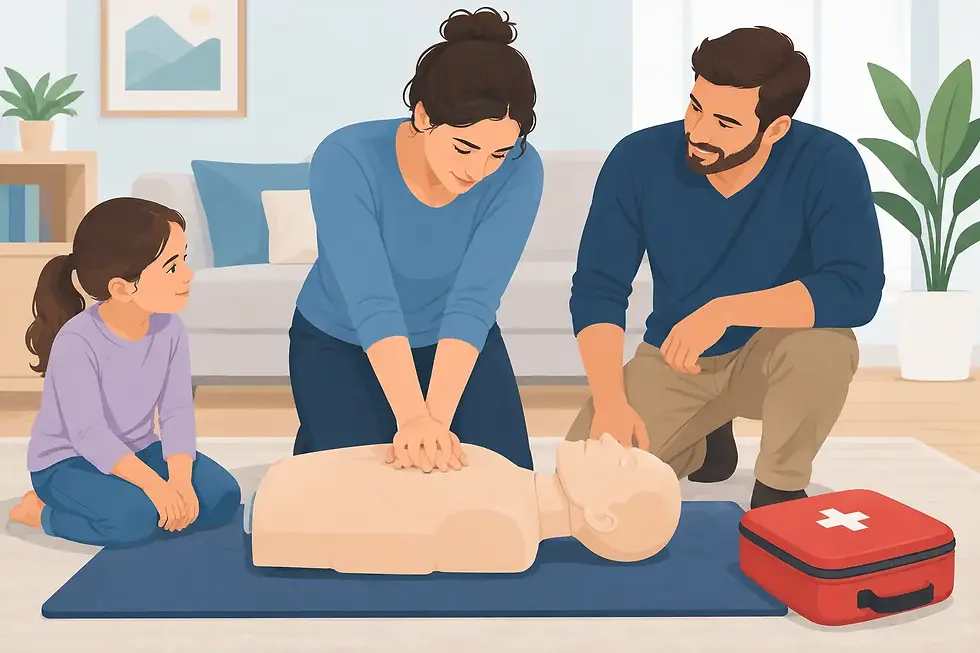
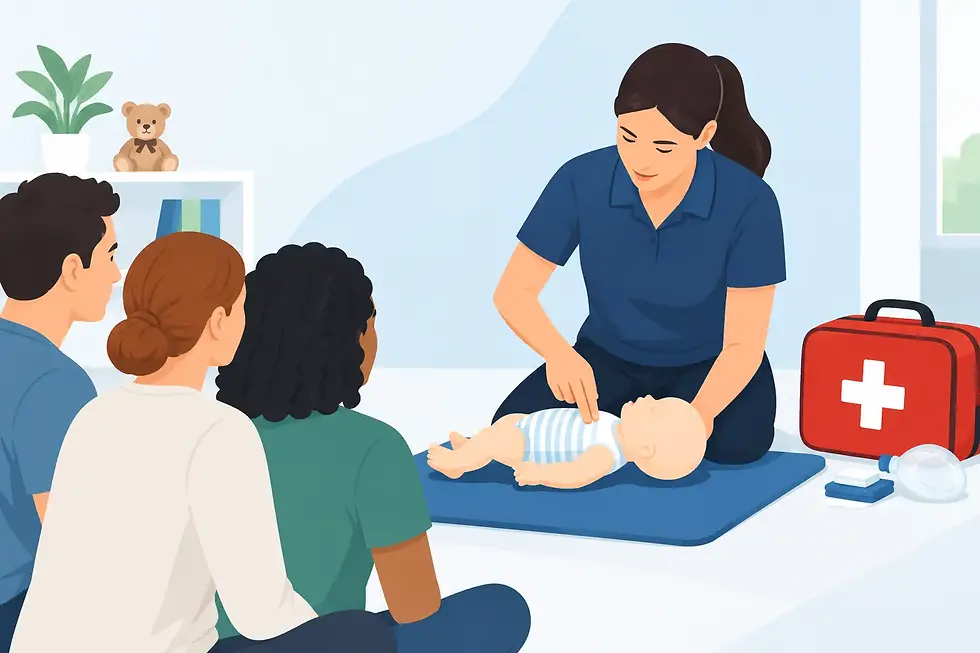
CPR instruction should include hands-on practice for infants and children, with adult skills included when the course format calls for them. Learners practice chest compressions, rescue breaths, and the use of an automated external defibrillator, or AED. Early CPR and early AED use can make a meaningful difference in a cardiac emergency, so sitters need more than a video or a checklist. They need feedback on technique.
First aid training expands beyond CPR. It commonly covers how to respond to cuts, burns, nosebleeds, suspected broken bones, bites and stings, heat-related illness, seizures, poisoning concerns, and injuries involving the head, neck, or spine. The course should also address choking response for conscious infants and children, along with the transition to CPR if a child becomes unresponsive.
The most useful classes teach judgment as well as individual skills. A caregiver needs to know when to call 911 immediately, when to contact a parent, when to consult Poison Control, and when a situation can be handled with basic first aid and close observation. Training helps clarify those decisions, but it does not replace emergency dispatch instructions or medical evaluation when a child has warning signs.
Pediatric training is not simply adult training with smaller manikins
Children's bodies and common emergencies require a different focus. Infants may choke on food or small objects. Toddlers are prone to falls and accidental ingestion. School-age children may experience sports injuries, asthma symptoms, or severe allergic reactions. A pediatric course puts those risks in context and teaches age-appropriate response techniques.
This distinction matters when a caregiver is comparing classes. A general adult CPR course may be valuable for workplace readiness, but it may not meet a family's or child-care employer's expectations for infant and child care. Read the course description carefully and ask what age groups are included before booking.
Hands-On Skills Validation Builds Real Confidence
Online learning can be convenient, especially for sitters balancing classes, work shifts, and family responsibilities. It can explain the sequence of care and test knowledge. Still, CPR is physical. Proper compression depth, hand placement, rescue-breath technique, and AED operation benefit from guided practice and skills validation.
A blended pathway can work well when it pairs online coursework with an in-person skills session. Learners complete the knowledge portion on their schedule, then demonstrate required skills with an instructor or approved verification process. For learners who want more coaching, a fully instructor-led classroom course provides immediate correction, questions, and scenario-based practice.
Choose the format based on the requirement and the learner's comfort level. A first-time babysitter may benefit from a small, instructor-led class. An experienced caregiver completing a recognized renewal may prefer an accelerated or blended option, provided it meets the requested credential standard. The convenience of a course should never mean skipping the required hands-on component.
How to Choose the Right Course as a Babysitter
Start with the job, not the course name. Ask the parent, agency, camp, or child-care program whether they require a specific credential. Some organizations require an American Heart Association-aligned course, a pediatric first aid CPR AED credential, or a card that remains valid for two years. Others simply want proof that the sitter has current infant and child CPR and first aid training.
Then consider what is included. A course that covers infant, child, and adult CPR can be useful for a sitter who may need to assist a parent, grandparent, or another adult in the home. AED training is also worth having because AEDs are increasingly available in schools, gyms, apartment buildings, and public spaces. First aid should be part of the plan, not an afterthought, because most caregiver emergencies are not cardiac arrests.
Finally, look at completion logistics. Busy caregivers need clear scheduling, local skills practice, and prompt proof of completion. HealthForce Training Center offers flexible instructor-led, blended, and skills-validation pathways designed to make recognized emergency training faster and easier to complete. When a credential is needed for an upcoming job, confirm how and when the eCard or completion record will be issued after successful course requirements are met.
Training Helps Before an Emergency Starts
The best emergency response often begins with preparation. At the start of each babysitting job, ask where the first aid kit is kept, whether an AED is available, and where emergency exits are located. Confirm the child's allergies, medications, medical conditions, and emergency contacts. If the child has an epinephrine auto-injector, inhaler, seizure action plan, or other prescribed emergency medication, ask the parent to explain the plan and any authorization details before they leave.
A sitter should also keep a charged phone nearby, know the exact address of the home, and avoid leaving children unattended around water, food hazards, medication, or small objects. These are simple habits, but they reduce risk and make a response faster if something does happen.
During an emergency, calm communication is part of care. Call 911 when needed, follow dispatcher instructions, provide the trained response that is appropriate to the situation, and contact the parent as soon as it is safe to do so. Do not delay emergency care while trying to reach a parent first when a child is unresponsive, having trouble breathing, experiencing severe bleeding, or showing other signs of a life-threatening condition.
Keep the Credential Current and the Skills Fresh
CPR and first aid cards commonly have a two-year validity period, but requirements can vary by course and employer. Put the renewal date on your calendar as soon as you receive your completion record. Renewing before expiration can prevent a gap that affects a job application, agency placement, or child-care work schedule.
Practice also fades without use. Review emergency contacts and response plans with each new family. Revisit course materials periodically, and take a renewal class before your credential lapses. A current card signals readiness, while refresher training helps preserve the muscle memory needed to act decisively.
A babysitter may never need to perform CPR. That is the outcome everyone wants. But when parents hand over the keys and walk out the door, current training gives them something more valuable than reassurance: a caregiver who is prepared to respond when every second counts.

Comments