


How a CPR Class for Parents Builds Confidence
The moment a baby starts coughing hard, goes quiet after choking, or becomes suddenly unresponsive, parents do not need more information on a screen. They need a clear next step. A CPR class for parents gives families the hands-on practice to recognize an emergency, call for help, and begin care while emergency responders are on the way.
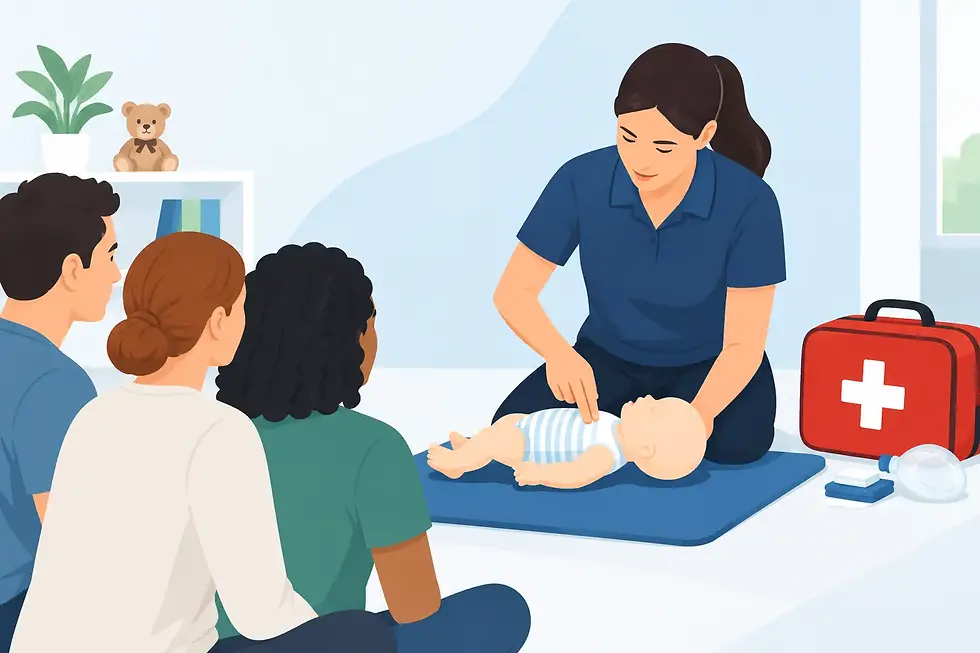
That preparation is not about expecting the worst. It is about reducing hesitation in the moments when seconds matter. Parents, grandparents, babysitters, and other caregivers can learn the same practical response sequence, practice it on training manikins, and leave with a plan that is easier to recall under stress.
Why Parents Need More Than a CPR Video
A video can introduce the idea of CPR, but it cannot confirm whether compressions are deep enough, whether your hand position is correct, or whether you can deliver breaths effectively when they are part of the course curriculum. Those details matter. CPR is a physical skill, and the confidence to use it comes from guided repetition.
A live, instructor-led class also helps parents separate common concerns from true emergencies. Not every cough requires CPR. Not every fall calls for an ambulance. But when a child is unresponsive and not breathing normally, or is only gasping, caregivers must move quickly. Training helps turn that high-pressure decision into a practiced response: assess the scene, get emergency help, start CPR, and use an AED as soon as one is available.
For many families, the best time to train is before a new baby arrives. For others, it is when a child begins solids, starts daycare, becomes mobile, or spends more time with a new caregiver. There is no wrong stage to learn. The useful question is whether every adult who regularly cares for the child knows what to do before professional help arrives.
What a CPR Class for Parents Should Cover
A parent-focused course should teach skills for infants and children, not only adult CPR. Infant and child bodies require different compression techniques, and choking response steps are different by age. Parents should be able to practice each skill, ask questions, and receive instructor feedback.
Infant and Child CPR
Students learn how to check responsiveness and breathing, activate the emergency response system, and begin high-quality chest compressions. Training covers the difference between infant and child techniques, including hand placement, compression depth, and compression rate.
Parents also learn how CPR changes when a second trained rescuer is available. One caregiver may call 911 and retrieve an AED while the other begins CPR. In a home, at a playground, or in a child-care setting, that division of tasks can make the response more organized.
Choking Relief
Choking is one of the most relevant emergency skills for families with young children. A class should cover how to recognize severe airway blockage in a responsive infant or child and how to provide age-appropriate choking relief. It should also explain what to do if the child becomes unresponsive.
This is where hands-on instruction is especially valuable. Parents can practice the sequence rather than trying to remember it from a booklet during an emergency. Training also reinforces an important distinction: a child who is coughing forcefully may still be moving air, while a child who cannot cough, cry, speak, or breathe needs immediate action.
AED Use and First Aid Awareness
An automated external defibrillator, or AED, is designed to guide a responder with audible prompts. Parents do not need a medical background to use one. A quality CPR course teaches when to apply the pads, how to keep everyone clear during analysis, and why early AED use can be critical during sudden cardiac arrest.
Many parents also benefit from first aid training. CPR addresses cardiac arrest and breathing emergencies. First aid prepares caregivers for bleeding, burns, allergic reactions, poisoning concerns, seizures, injuries, and other urgent situations while waiting for medical care. The right choice depends on your household, child-care responsibilities, and whether your employer or daycare requires a specific credential.
Choosing the Right Course Format
The best course is one you can complete, retain, and use. Busy parents often need a convenient schedule, but convenience should not remove the hands-on skills portion. Look for training that includes instructor feedback or a verified skills session using appropriate manikins.
An instructor-led classroom course is a strong fit for parents who want real-time coaching and time to ask questions. It is also useful when several family members want to train together. A small class can make it easier to repeat skills until the movement feels natural.
Blended learning can work well for parents with unpredictable schedules. In this format, learners complete online coursework first, then attend an in-person skills session for hands-on practice and evaluation. The online portion allows you to learn the concepts at your own pace. The skills check confirms that you can perform them.
Self-guided options with a CPR Verification Station may be available in some locations. These pathways can offer added scheduling flexibility, particularly for learners who are comfortable with independent coursework. Before registering, confirm which format meets your goal. A parent taking a class for household preparedness may have different needs than a child-care professional who must provide a specific credential to an employer.
Certification: Helpful for Some, Not Required for Everyone
Parents do not need a job requirement to benefit from CPR training. The skill itself is the value. Still, a formal completion card can be useful for babysitters, nannies, foster parents, coaches, camp volunteers, and child-care workers who must document current training.
If you need a credential, verify the exact requirement before enrolling. Some workplaces request a particular course type, such as CPR/AED and First Aid or a pediatric-focused course. Healthcare professionals usually need BLS rather than a lay-rescuer CPR course because their clinical responsibilities and credential standards differ.
For courses that issue an American Heart Association-aligned eCard, successful completion typically depends on completing all course components, including hands-on skills testing and any required written assessment. Many eCards are valid for two years, but employers and licensing agencies may set their own renewal timelines. Save your digital card where you can find it when a school, employer, or program asks for proof.
Make Training a Family Safety Plan
One trained parent is better than none, but one trained parent should not carry the whole plan. If possible, train the adults who spend regular time with your child: a partner, grandparent, babysitter, older teen caregiver, or close family friend. They do not all need the same professional credential. They do need a shared understanding of how to call for help, where emergency information is kept, and who will stay with the child.
After class, take ten minutes to make the skills more usable at home. Confirm your address is posted clearly for a babysitter. Save emergency contacts in visible places. Identify the nearest AED at your gym, school, workplace, and common community locations. Keep medications and allergy information organized, especially if your child has a known condition.
It also helps to talk through realistic scenarios without alarming children. For example, a caregiver can practice saying, “Call 911 and come back to me,” or decide who retrieves an AED at a sports field. Simple planning prevents confusion when everyone is stressed.
What Parents Often Worry About
Many parents hesitate to enroll because they are afraid they will not remember every detail. That concern is normal. A good class does not ask you to memorize a medical textbook. It teaches a sequence, gives you opportunities to perform it, and helps you understand the priorities: get help, begin CPR when needed, and use an AED quickly.
Others worry they may hurt a child while performing CPR. In a true cardiac arrest, doing nothing is the greater danger. Proper training teaches techniques designed for infants and children, but it also makes the larger point clear: prompt action is essential when a child is unresponsive and not breathing normally.
Parents may also wonder whether online-only training is enough. It depends on why you are taking the course and what an employer requires, but online information alone cannot replace a required in-person skills evaluation. If your goal is confidence in an emergency, choose a pathway that lets you physically practice.
HealthForce Training Center offers convenient training pathways for parents and caregivers who want hands-on CPR, choking, AED, and first aid preparation without unnecessary delays. Choose a course that fits your schedule, complete every required step, and keep your completion information available for future renewal.
The most reassuring part of a CPR class is not the card in your wallet. It is knowing that if your child, or someone else’s child, needs help, you can take the first lifesaving steps with purpose.


Comments