


Pediatric First Aid Certification Course Choices
A toddler suddenly develops trouble breathing during lunch. A child falls hard on the playground. An infant spikes a fever while in your care. These are the moments when pediatric first aid certification turns concern into a clear next step. It prepares you to recognize emergencies, provide appropriate first aid, and get professional help quickly.
For child-care professionals, school staff, home-care workers, babysitters, and healthcare-bound learners, this training can also be a job requirement. For parents and grandparents, it is practical preparation for the people who count on them most. The right course should meet your credentialing need while giving you hands-on confidence to act.
What Pediatric First Aid Certification Covers
Pediatric first aid training focuses on the injuries and sudden illnesses that can affect infants and children. The goal is not to replace emergency medical care. It is to help a trained responder assess the scene, make safe decisions, deliver initial care, and know when to call 911 or seek urgent medical attention.
A quality course commonly addresses how to respond to bleeding, burns, fractures, allergic reactions, seizures, poisoning, heat and cold emergencies, bites and stings, and diabetic emergencies. Learners also practice responding to choking and learn when CPR and AED use may be needed for infants and children.
The exact curriculum depends on the course provider and program. That distinction matters. Many employers, child-care licensing agencies, school districts, or healthcare programs require a specific course title or recognized training organization. Before enrolling, verify the required credential, whether infant and child CPR/AED must be included, and whether blended learning is accepted.
Who Needs This Credential?
Pediatric first aid is especially relevant when you are responsible for children before emergency services arrive. Child-care center staff, preschool teachers, camp counselors, coaches, nannies, foster parents, school personnel, and youth-program employees may need it for licensing or employment. Home health aides and private caregivers may need it based on an employer’s policies or the needs of the families they serve.
Healthcare students and clinical professionals should check their program requirements closely. A pediatric first aid card may be valuable, but it does not replace BLS, PALS, or another credential required for a clinical role. BLS is generally designed for healthcare providers, while PALS is an advanced pediatric life-support course for qualified healthcare professionals. First aid training serves a different purpose: prompt, practical response to common emergencies outside an advanced clinical setting.
Parents, grandparents, and babysitters may not need a credential for work, but the skills are still worth having. For these learners, the best option is often a course that includes infant and child CPR, choking response, AED training, and plenty of opportunity to practice hands-on skills.
Choose the Course Format That Fits Your Schedule
Busy schedules should not force you to postpone a required certification. The most effective format is the one that meets your requirement and allows enough time for meaningful skills practice.
Instructor-led classroom training
A classroom course gives you real-time instruction, guided practice, and immediate feedback from an instructor. This format works well for first-time learners, people who prefer asking questions as they go, and employers that require fully in-person instruction. It also gives you dedicated time to practice techniques with manikins and training equipment before skills are evaluated.
Blended learning with an in-person skills session
Blended learning typically lets you complete online coursework at your own pace before attending an in-person skills practice and testing session. It can be a practical choice for shift workers, students, and caregivers with limited availability. The online portion is not a shortcut around hands-on learning. You still need to demonstrate required skills in person to complete the course.
Self-guided coursework and skills verification
Some approved pathways combine self-guided online education with an on-site skills assessment using a verification station or instructor-supported process. This may be ideal if you need flexibility and can schedule your skills check promptly. Confirm that your employer or licensing authority accepts this pathway before you purchase an access code or book a testing appointment.
A faster option is only helpful when it is compliant. Always match the delivery method to the credential rules that apply to your job, school, or license.
How to Verify You Are Booking the Right Course
Before you register, take a few minutes to read the requirement exactly as it appears in your employee handbook, clinical checklist, job posting, or licensing paperwork. Look for the required training organization, course name, expiration period, and whether the credential must include CPR and AED instruction.
You should also ask whether the requirement is for initial certification or renewal. A renewal course can be appropriate if your current card is still valid or within the provider’s allowed renewal window. If your certification has expired, you may need a full initial course instead. Policies vary, so do not assume a short renewal option will meet every requirement.
If you work in child care, make sure the course addresses both infant and child response. A course aimed only at adult first aid will not meet the practical needs of a pediatric setting. If CPR is required, confirm that the credential includes the age groups your workplace serves.
Finally, plan for proof of completion. Many learners need documentation quickly for onboarding, clinical placement, or license renewal. Courses that provide a digital eCard after successful completion can make it easier to share your credential with an employer and keep a copy for your records.
What Hands-On Skills Practice Should Feel Like
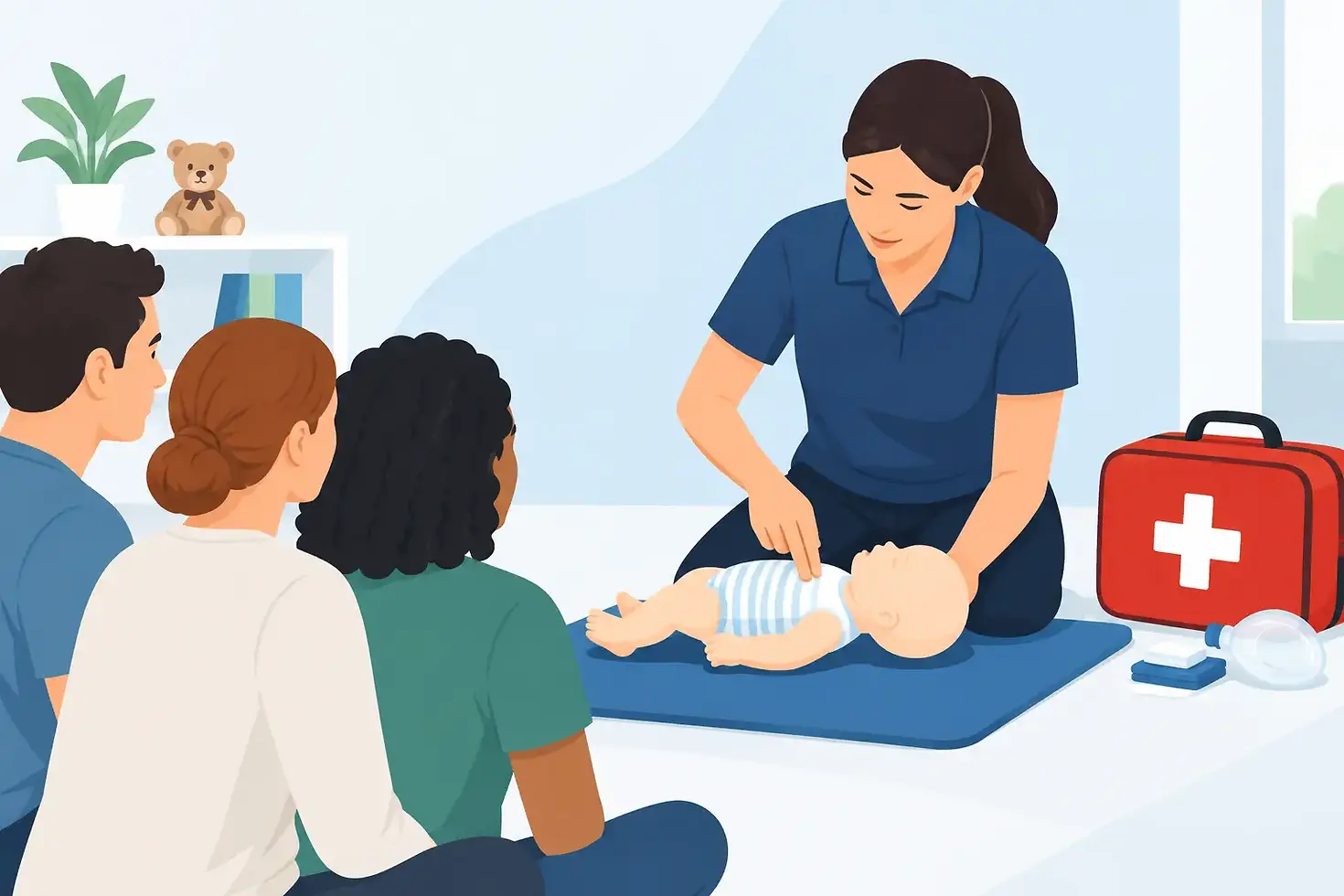
Good pediatric emergency training is active. You should expect to work through realistic scenarios, not simply watch a presentation. During skills practice, instructors can correct hand placement, compression depth and rate, rescue-breath technique, choking response, and safe use of an AED trainer.
This practice is particularly valuable because infant, child, and adult emergencies are not handled exactly the same way. An infant’s smaller body requires modified techniques. A child’s developmental stage can affect how you communicate, comfort them, and assess what happened. Training helps you slow down, follow a sequence, and avoid guessing under stress.
Ask questions during class. For example, what should you do if a child has an epinephrine auto-injector? When should you call poison control? When can an injured child be moved? An instructor can explain the limits of first aid and reinforce the need to follow workplace policies, emergency action plans, and EMS direction.
Keep Your Certification Current
Most first aid credentials are valid for a defined period, often two years, but your employer or state requirement controls. Put the expiration date in your calendar as soon as you receive your card. Scheduling renewal early is far easier than trying to solve an expired credential the week before a work deadline.
Skills can fade even when a card is current. Review your workplace emergency plan, locate first aid supplies and AEDs, and refresh your knowledge when policies change. Child-care centers and schools benefit when staff members know not only how to provide care, but also who calls 911, who meets EMS, who contacts a parent, and who documents the incident.
HealthForce Training Center offers convenient pediatric first aid, CPR, and skills-based training options for learners who need a recognized credential without unnecessary delays. Choose the course that matches your requirement, complete every required step, and keep your digital proof of completion accessible.
The best time to prepare is before the playground fall, allergic reaction, or choking emergency happens. A current credential and practiced skills give you a calmer, more capable response when a child needs help right away.


Comments