


Can Online CPR Meet Requirements? Know First
A job offer can be delayed by one small detail: submitting a CPR card that your employer will not accept. That is why the question, can online CPR meet requirements, needs a clear answer before you pay for a course or schedule time away from work. Online learning can be part of a valid certification pathway, but a fully online class is not automatically accepted for every workplace, license, school, or clinical setting.
For healthcare professionals, students, care workers, and anyone whose credential is tied to employment, the issue is not simply whether you learned CPR online. It is whether your completed course matches the exact standard set by the organization requesting proof.
Can Online CPR Meet Requirements for Work?
Sometimes, yes. It depends on the credential you need and whether the course includes an approved hands-on skills evaluation.
Many employers accept a blended learning format. In this model, you complete cognitive course material online at your own pace, then demonstrate CPR skills in person with an instructor or through an approved skills-verification process. This format can provide the flexibility busy professionals need while still confirming that you can perform compressions, use an AED, give breaths when required, and respond to choking emergencies correctly.
A course that is entirely online, with no live or verified skills component, may be useful for personal knowledge. It may also meet a limited workplace policy. However, it often does not meet clinical, hospital, nursing program, EMS, childcare, or regulated healthcare requirements. Those settings commonly require documented hands-on performance.
The practical rule is simple: do not assume that “online CPR certification” means “employer accepted.” Check the course format and the requester’s policy before enrolling.
Why Hands-On CPR Skills Matter
CPR is physical. Reading the steps and passing an online quiz do not show whether your compression depth, rate, hand placement, or AED use is effective. In a real emergency, those details matter.
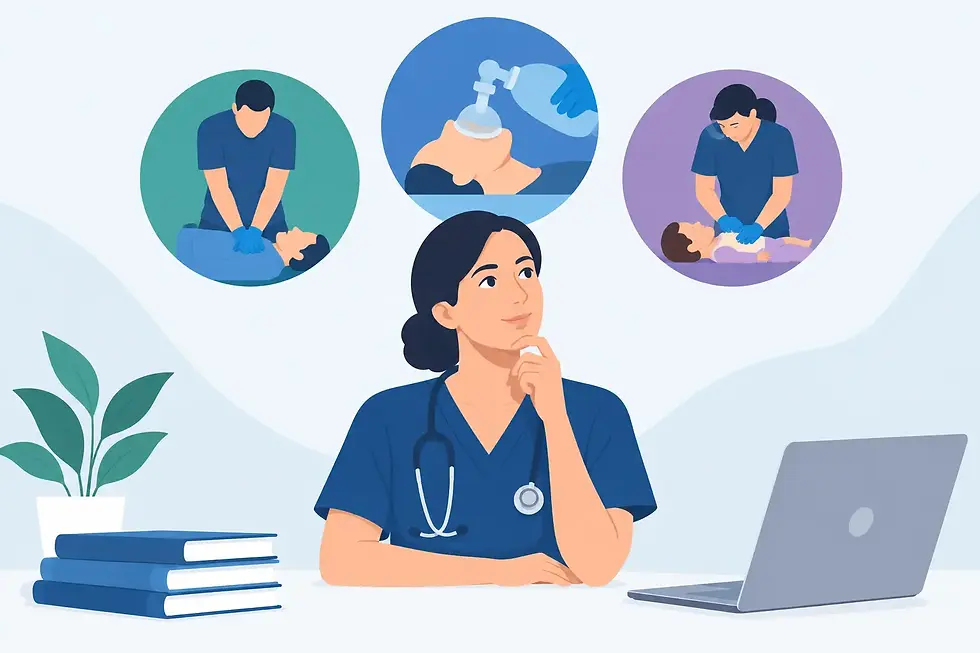
A hands-on evaluation gives an instructor or approved verification process the opportunity to confirm that you can perform the required skills on a manikin. Depending on the course, this may include adult, child, and infant CPR; use of an AED; choking response; rescue breathing; team-based resuscitation; and bag-mask ventilation.
For Basic Life Support, Advanced Cardiovascular Life Support, Pediatric Advanced Life Support, and other clinical-level programs, skills confirmation is especially significant. These credentials are built for providers who may need to respond as part of a care team, not just recognize an emergency.
That is why many recognized pathways combine online coursework with an in-person session. You gain scheduling flexibility for the knowledge portion without skipping the performance standard your employer expects.
Know What Your Employer Actually Requires
Before choosing a course, ask your manager, HR department, school coordinator, licensing board, or clinical-placement office for the exact requirement. A quick check can prevent the cost and frustration of having to take the class again.
Ask which provider or curriculum is accepted, whether an online-plus-skills format is allowed, and whether the certification must include adult, child, and infant CPR. If you work in healthcare, also confirm whether you need BLS rather than a general CPR and First Aid course. These are not interchangeable credentials.
For example, a hospital employee may need a healthcare-provider BLS card that includes hands-on skills testing. A daycare employee may need pediatric CPR and First Aid. A parent or grandparent may choose a CPR class focused on practical emergency readiness, without a workplace credential requirement. The right course depends on who is asking for the card and what emergencies you are expected to handle.
If the requirement is written in a job posting or onboarding packet, look closely at the wording. Terms such as “American Heart Association,” “hands-on skills session,” “instructor-led,” “BLS Provider,” or “accepted for clinical placement” are signals that a fully online-only certificate may not be enough.
Online, Blended, and Classroom CPR Formats
Course names can sound similar, so focus on the delivery method and final credential.
A fully online CPR course generally includes videos, reading, and an online assessment. It is convenient, but it may not include a live instructor, manikin practice, or verified skills test. Acceptance varies widely.
A blended learning course starts online and finishes with a hands-on skills session. This is often a strong choice for learners who need a recognized credential but cannot attend a long traditional class. The online portion allows you to complete lessons around work shifts, while the in-person component verifies your practical ability.
An instructor-led classroom course combines teaching, practice, testing, and feedback in one scheduled session. It can be the best fit when you want direct support, are new to CPR, or need to complete your training quickly in a structured setting.
Self-guided completion options may also be available through approved online coursework and CPR verification stations. These pathways can be highly efficient, but they still require you to complete every assigned component successfully. Convenience does not remove the skills requirement.
How to Choose a Compliant Online CPR Pathway
Start with the credential, not the advertised course length. A two-hour online class may be fast, but it is not a good value if your employer rejects it.
First, identify whether you need CPR and First Aid, BLS, ACLS, PALS, pediatric training, or another specialized program. Next, confirm the accepted provider and whether your requirement calls for an eCard or certificate with a particular validity period. Many professional credentials are valid for two years after successful completion, but your workplace may require renewal earlier based on its own policy.
Then verify the full course sequence. If you choose online learning, find out exactly how and where the skills portion is completed. Is an in-person appointment required? Is a qualified instructor available? Will you receive digital proof of completion promptly after you pass? Clear answers to these questions help you plan around orientation dates, clinical rotations, and renewal deadlines.
Finally, make sure the name on your card matches the name used by your employer or school. Keep a digital copy of your eCard and save any course-completion emails. When a credential is needed for onboarding, having accessible proof can make a difference.
Common Mistakes That Cause CPR Cards to Be Rejected
The most common problem is selecting a general online CPR course when the employer requires BLS for healthcare providers. General CPR may teach valuable life-saving skills, but BLS usually has different content and performance expectations.
Another mistake is completing only the online portion of a blended course. Until the hands-on component is successfully completed, the full certification process is not finished. Do not wait until the last day before a job start date or clinical deadline to schedule skills testing.
Learners also run into trouble when they assume a course is accepted because it says “nationally recognized” or “OSHA compliant.” Those phrases do not override a specific employer rule. The organization requesting the credential has the final say on what it will accept.
There is also a difference between initial certification and renewal. Some renewal pathways are designed for learners with an unexpired credential, while others require a full course. If your card has expired, confirm which option applies before booking.
A Fast Way to Get the Right CPR Credential
If your schedule is tight, choose a training option that makes the requirements visible from the start: the credential name, course format, skills-testing plan, completion steps, and expected eCard delivery. HealthForce Training Center offers instructor-led and blended pathways designed to help learners complete compliant training without unnecessary delays.
Bring your employer’s requirements with you when you enroll. A few minutes spent matching the course to the request can save hours of repeat training later. The best CPR course is not merely the fastest one available - it is the one that prepares you to respond and gives you the proof your role requires when it matters.


Comments